Monday, February 29, 2016

Legislative Research: Archival Collections

Gov. Foster Furcolo in 1960.
Photograph from the Foster Furcolo
Papers (Ms. Coll. 86) 
Depending on where and how far your legislative research takes you, the research process may involve searching for materials that supplement the official published documents housed in the State Library.  This often requires visiting other institutions and looking at archival collections relevant to the information you are seeking, and it’s important to be aware of what’s available out there.  Here are some examples that should be kept in mind the next time you research legislation:
  • Committee files:  When a bill is assigned to a legislative committee and goes through a public hearing, committee staff will often compile a bill folder that includes submitted testimony.  The folder is retained throughout the legislative session by the committee; however its ultimate disposition varies.  Many of these records are deposited at the State Archives for permanent retention.  If you are unable to find the hearing records or other committee files you are looking for, it’s important to contact the relevant committee to determine where they are housed.
  • Governor’s legislative files:  These files include those produced by the Governor’s Legislative and Legal Counsel staff members and can provide background information on legislation from the perspective of the Executive Branch.  Recent records can be accessed by contacting the Governor’s Legislative Office; earlier records (starting in 1964) are housed at the State Archives.  In addition, the executive records of Massachusetts governors (1802-present) are also at the Archives.  For more information visit: http://www.sec.state.ma.us/arc/arccol/colidx.htm
  • Legislative (or “Bill”) packages:  These are the original manuscript records compiled for each bill (aka proposed legislation).  Passed legislation is filed by its act chapter number, while unpassed legislation is filed by final bill numbers.  More recent (past 10 years or so) packages are housed at the Secretary’s Regulations and Publications Division; earlier packages can be found at the State Archives.
  • Papers of elected officials:  The State Library collects records of Massachusetts legislators. The collections, which span from the early 20th through 21st centuries, include those of Calvin Coolidge, Andrew Natsios, Lois Pines, Foster Furcolo, and Barbara Gray.  These collections contain little personal material and primarily include records relating to legislation, issues of concern to the legislator, and constituents.  Finding aids to these collections can be accessed in the library’s DSpace digital repository.  Records (or manuscript) collections such as these may be deposited at other institutions as well; ArchiveGrid is a useful tool to use to help track them down.

Kaitlin Connolly
Reference Department


Monday, February 22, 2016

Massachusetts Boards and Commissions

Within the Massachusetts Government, there are a large number of boards and commissions that are associated with state agencies. Often when I am adding public documents to our digital repository, I will find reports that were authored by or for certain commissions or boards I know nothing about. These boards have a wide range of responsibilities. Some have very narrow missions while others watch over large numbers of licensed business and professionals or supervise government spending. These boards and commissions are an important part of our state government, but it is not always understood who these groups are or what responsibilities they may have.


Boards and commissions are governmental organizations that work with specific agencies to set standards and agendas, act as advisors, influence policies and regulations, assist with business strategies, or create studies of industries or specific topics. Members of these boards and commissions are appointed by the appointing authority (often the Governor but this can vary depending on the board.) Members are appointed based on skill, interest, or experience in a certain field. Many boards and commissions have seats saved for members with very specific backgrounds or qualifications but others are open to anyone looking to get involved with state government or have issues they believe to be important. Usually, these positions are unpaid besides reimbursement for some expenses, so it is a commitment many citizens choose to make because they care about certain topics or problems and wish to make a difference.

One of the best resources to find out more on this subject is the Boards and Commission website run by the Office of the Governor. Recently, Governor Patrick started a database that allows citizens to search through state agencies for boards, their legal authority, purpose, board members and vacancies that may be available. While the boards here are only those that the Governor is the appointing authority, it is a great way to find out about hundreds of boards and commissions and the type of work they do.  If you are interested in how to be appointed to a board, the Commission on the Status of Women put out a basic guide back in 2012 about the appointment process that has helpful advice and ideas. With these resources and a little research into specific organizations, we can better understand the rolls of these commissions and the work they do.


Stephanie Turnbull
Reference Librarian

Tuesday, February 16, 2016

How Massachusetts Became a “Blue State”

Patrick Joseph Kennedy,
shown here as a state
representative serving
Boston in 1888, was a
son of Irish immigrants
and grandfather to
John F. Kennedy.
When one thinks of the quintessential “blue states” in the U.S., Massachusetts is always on or near the top of the list.  This wasn’t always the case, however. The transition from a strong Republican state government to a strong Democratic state government began in 1928 and continued through 1958--with the Republican Party further weakening into the 1970s.  This shift is evidenced in the political complexions of the House and Senate, and the year 1958 marks the turning point in which the Democrats truly become the majority party in the General Court.  Although this change appears quite recent, the history leading up to it goes much further back in time.

James Michael Curley in 1901 during
 his campaign for Massachusetts
State Representative. He was the
son of Irish immigrants and served
multiple terms as Mayor of Boston
and in the U.S. House of
Representatives. Image courtesy
of Images of America: A Journey
Through Boston Irish
History by Dennis P. Ryan
.
The most important historical factors that contributed to the weakening of the Republican Party and the ascension of the Democratic Party in Massachusetts were immigration and birth rates, both which greatly changed the state’s population patterns.  Beginning in the early to mid-19th century  Massachusetts, which was once an “old-stock Yankee Protestant state,” saw the mass arrival of Irish Catholic immigrants escaping the potato blight and famine that was devastating Ireland.  Due to conflict with Republican Yankees, who had absorbed the anti-Catholic members of the dissolved Know Nothing Party, the majority of Irish and other Catholic immigrant groups largely identified as Democrats.  Over the course of thirty or so years, from the 1860s through the 1890s, the Irish also began to dominate local Democratic ward committees, municipal positions (police officers, firemen, etc.), and labor unions—which strengthened the group’s political clout in the state.  Immigrant groups also greatly increased birth rates and tended to have larger families than the Yankee Protestants.  These changes in the state’s demographics also affected the once polarized party ideologies:  the Democratic Party became “de-radicalized” and the Republican Party became less conservative.

While this blog post touches upon what are considered to be the biggest historical influences, there were other factors that also played a part in the political shift.  Here are some suggested resources for further reading, all of which are available in the library:


Kaitlin Connolly
Reference Department


Tuesday, February 9, 2016

February Author Talk: Thomas A. Horrocks


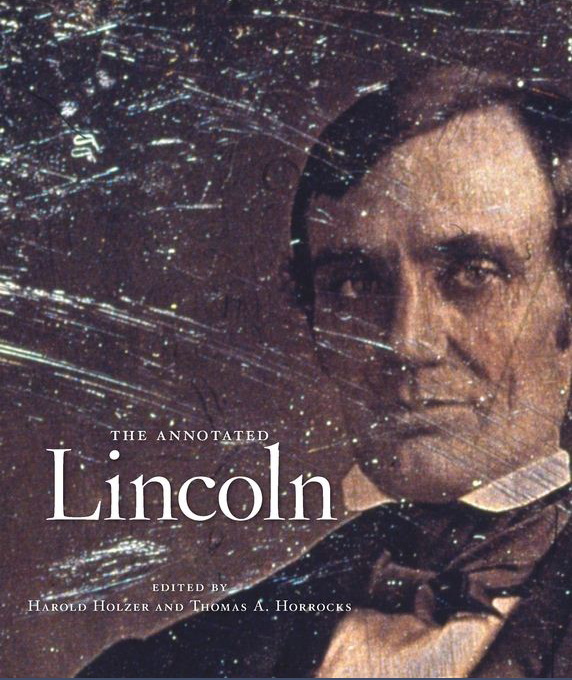
The Annotated Lincoln, edited by Thomas A. Horrocks and Harold Holzer 
Thursday, February 25, 2016—Noon to 1:00 pm
State Library of Massachusetts—Room 341, Massachusetts State House


Please join us at the State Library at noon on Thursday, February 25, for an Author Talk with Lincoln scholar Thomas A. Horrocks. Mr. Horrocks will be speaking about his most recent book, The Annotated Lincoln, which was released on January 18, 2016.

The Annotated Lincoln chronicles three decades of Lincoln’s career, from his first campaign for the Illinois General Assembly in 1832 to his last public address, three days before his assassination in 1865. Along with Harold Holzer, Mr. Horrocks provides copious annotations to Lincoln’s speeches, proclamations, letters, and poetry that are presented in the book. Lincoln’s original texts and the editors’ annotations reveal the depth of thought that Lincoln gave to such momentous issues as slavery, emancipation, preserving the Union, and civil war.

In addition to The Annotated Lincoln, Mr. Horrocks is also the author of President James Buchanan and the Crisis of National Leadership, The Living Lincoln (also with Harold Holzer), and Lincoln’s Campaign Biographies. His career so far has been spent mostly in academic libraries, including the College of Physicians of Philadelphia’s Historical Medical Library, Harvard Medical School’s Countway Library, and Harvard’s Houghton Library. Most recently, Mr. Horrocks served as the Director of the John Hay Library at Brown University.

Mr. Horrocks’ talk is free and open to the public, and copies of the book The Annotated Lincoln will be available for purchase and signing at the event. Please register online and join us on February 25 at the State Library.

Laura Schaub
Cataloging Librarian

Monday, February 1, 2016

Monday, January 25, 2016

Biographical and Political Resources in Massachusetts Government


At the State Library’s reference desk we get a fair number of questions about the Massachusetts government. Many people are interested in finding information on relatives who served in the legislature. Questions range from how many members of the legislature were there in a specific year to who was the governor in a given year.  The reference staff uses a variety of resources to answer these questions.

Manual of the General Court This resource dates back to 1858 and includes facts and figures about the Massachusetts Legislature otherwise known as the General Court. It is available in print and online and includes information such as:
  • Lists of Governors starting from colonial times
  • List of the current House of Representatives including districts, addresses and seat numbers
  • When the session for the general court starts and ends
  • The rules used by the legislature 
  • List of Massachusetts legal holidays
Image from Legislative Souvenir 1907

Public Officers of the Commonwealth  This resource has been published under several different names including: Legislative Souvenir and “bird book” and contains:
  • General Court members, Constitutional Officers and the executive council members
  • Photographs of the Massachusetts State House and Offices
  • one-page biographies with photographs of Massachusetts officials elected at the Federal and State level

The Massachusetts Political Almanac  (1981-current year) provides one-page summaries of legislators, photographs, biographical information, and key role call votes.  It also includes one-page profiles of executive branch officials and the duties of their office. Other information includes:
  • Terms in office
  • Profiles of agency heads 
  • Organizational charts for executive agencies
  • Committee members

Leading the Way: a History of the Massachusetts General Court 1629 -1980 – This book describes the history of the legislature from colonial time through 1980. Other information includes:
  • List of Massachusetts Senate Presidents
  • List of Massachusetts Speakers of the House
  • Statistics about the legislature 
Please visit the State Library of Massachusetts to view these and many holdings about state government.


Naomi Allen
Reference Librarian


Tuesday, January 19, 2016

Celebrating Martin Luther King, Jr. and his Massachusetts Connection

Martin Luther King
image from Wikimedia Commons
This week the nation pauses to honor the extraordinary life and legacy of Dr. Martin Luther King, Jr. on what would have been his 87th birthday. The holiday honoring King was signed into law by President Ronald Reagan on Nov. 2, 1983 (Public Law 98-144) and was first observed at the federal level on Jan. 20, 1986. What is lesser known is that Massachusetts was one of the first states (after Illinois and at the same time as Connecticut) to establish King’s birthday as a legal holiday over a decade earlier than the federal government by passing “An Act Establishing Martin Luther King’s Birthday as a Legal Holiday” on July 8, 1974  (Chap. 493, Acts of 1974). The holiday reminds us to focus on the legacy of Dr. King’s ideals—civil rights and human equality, the use of nonviolence to promote change, and encouraging people to answer to the call to public service.


Senator Edward Brooke
image from Wikimedia Commons
Massachusetts Republican U.S. Senator Edward Brooke (along with U.S. Representative colleague John Conyers, D-Michigan) led the federal effort to make King’s birthday a national holiday by introducing the first bill in Congress in 1979 (the 50th anniversary of King’s birth), an effort that would fall short by only 5 votes of the two-thirds needed for passage. A House bill establishing the holiday would ultimately prove successful 5 years later after Brooke had left office but his tireless commitment to the federal King holiday bill laid the considerable groundwork for its passage. Speaker of the House Tip O’Neill (D-Massachusetts) got a standing ovation after his closing remarks recommending passage of the 1983 House bill and Sen. Edward M. Kennedy (D-Massachusetts) was the sponsor of the same bill in the Senate and gave a passionate defense of Dr. King during a contentious Senate debate (detailed in a New York Times article from Oct. 1983).

Dr. King was warmly welcomed to the Massachusetts State House on April 22, 1965 to address the Massachusetts General Court—this was nearly 2 years after giving his most famous “I Have a Dream Speech” at the Lincoln Memorial in the summer of 1963. The inspirational words in his speech to the Massachusetts General Court can be found in the text of House Bill no. 4155 of 1965 and can be accessed HERE in the State Library’s DSpace digital repository. Reading his speech again, one finds that his words are just as powerful and relevant today in 2016 as they were in 1965.

Judy Carlstrom
Technical Services