Monday, May 8, 2023

What is a commonwealth and why is Massachusetts considered one?

Have you ever wondered what the term “commonwealth” means or why Massachusetts is considered one? You aren’t alone; we get that question fairly often here in the Reference Department! 

The short answer is: because of the Massachusetts Constitution. Let's dig a little deeper though and look at the history as to how this came about. From the years 1776 to 1780, the phrase “the State of Massachusetts Bay” was used at the top of all Acts and Resolves. Leading up to 1780, the term “Commonwealth” was popular when referring to “a whole body of people constituting a nation or state.” Some political writers even preferred this term and the usage of this term may also have been a reference to anti-monarchic sentiment. In 1780, however, the Massachusetts Constitution went into effect. Part 2 of the Constitution states “that the people ... form themselves into a free, sovereign, and independent body politic, or state by the name of The Commonwealth of Massachusetts." From there on out, Massachusetts legally became known as a commonwealth because it was written in the Constitution as such. Virginia, Pennsylvania, and Kentucky also called their states commonwealths.

Image of Massachusetts Constitution,
courtesy of Mass. State Archives

It’s important to note that commonwealths are states, but states are not commonwealths. States and commonwealths are equal, however, and one does not have any special political status or a different kind of legal relationship to the rest of the country than the other does. Being a commonwealth just comes down to the question of whether or not the term was used in a state’s constitution.

The Massachusetts Constitution, written by John Adams in 1780, is the oldest functioning written constitution in the world. It served as a model for the Constitution of the United States, which was written in 1787 and went into effect in 1789.

Check out our webpage to find out why this term may have been used and what John Adams’ thoughts may have been while framing the Constitution. Merriam-Webster has some information on this as well. If you’re interested to read more about the history of the Constitution and Massachusetts, be sure to check out this mass.gov website. Don’t hesitate to reach out to us at Reference.Department@mass.gov if you have any questions about this or another topic!


Jessica Shrey
Reference Librarian


Thursday, May 4, 2023

State Library Newsletter – May Issue

There’s a lot happening this May! Read about the library’s new resources, upcoming events, displayed items, and more. Pictured here is a preview, but the full issue can be accessed by clicking here. And you can also sign up for our mailing list to receive the newsletter straight to your inbox.


Wednesday, May 3, 2023

Author Talk with Michael Liu

  • Forever Struggle: Activism, Identity, and Survival in Boston's Chinatown, 1880-2018 
  • Tuesday, May 9, 2023. 12pm - 1:00pm
  • State Library of Massachusetts - Room 341, Massachusetts State House
  • Livestream: https://www.youtube.com/user/mastatelibrary

In honor of Asian/Pacific American Heritage Month, the State Library Author Talks Series is excited to host author Michael Liu. Liu will be speaking on his 2020 book, Forever Struggle: Activism, Identity, and Survival in Boston's Chinatown, 1880-2018. Please join us on Tuesday, May 9th at noon, in our historic reading room for this event. We will also be livestreaming the talk on our Youtube channel, courtesy of the Massachusetts House of Representatives Broadcast Services.

About the book: Forever Struggle, details the history of Boston's well known Chinatown neighborhood. From early immigration to urban renewal projects, Liu enlightens readers to the efforts of the Chinatown community to maintain its identity and presence in an ever-changing city. Forever Struggle demonstrates the power of ethnic communities as they endure urban transformation. 

About the author: Michael Liu is a former Senior Research Associate at the Institute for Asian American Studies at the University of Massachusetts Boston. Liu grew up in Boston’s Chinatown and is currently an activist for Chinatown and Asian American communities. Liu is coauthor of The Snake Dance of Asian American Activism: Community, Vision, and Power.

If you are able to join us in person, attendees will be able to participate in a question-and-answer session with the author as well as purchase a copy of the book. As always, this author talk is free and open to all. Assisted listening devices will be made available upon request. Any questions or concerns, please email us at AuthorTalks.StateLibrary@mass.gov.

Want to stay up to date on future Author Talks at the State Library? Join our mailing list. For more information on the State Library Author talks series, please visit our site: https://www.mass.gov/state-library-author-talk-series.

Monday, May 1, 2023

Preservation Week at the State Library: A Conserved Item on Display!

Happy Preservation Week! April 30 through May 6 has been designated by the American Library Association as time to raise awareness of the preservation measures that are taken in libraries, archives, and museums to ensure the long-term integrity of their collections. Here at the State Library, our preservation program covers book and paper repair, reformatting, environmental monitoring and disaster preparedness, and re-housing and cleaning our collection. The physical repair of items in our collection is called conservation, and while we undertake a fair amount of that work on-site in our preservation lab, we also occasionally send out items to be treated at the Northeast Document Conservation Center (NEDCC). This month, we are celebrating Preservation Week by exhibiting an item in our display case that has undergone treatment at NEDCC, along with a facsimile of it in its “before” state. Displaying these items side-by-side really emphasizes the transformation that an item undergoes when it’s conserved!

The displayed broadside is An Act to Prevent Profane Cursing and Swearing, published by the Commonwealth of Massachusetts in 1798. It was part of an NEDCC project in 2017/2018 to conserve some of the historically significant broadsides in our Special Collections holdings. When we work with NEDCC, they begin by sending us a condition assessment and proposed treatment plan. Once the item has been conserved, we receive before/after images, along with a detailed description of the item’s condition upon receipt and subsequent treatment. Having thorough documentation of condition and treatment allows us to maintain a comprehensive record of the items in our collection. In this instance, the broadside had tape and residual adhesive removed, it was humidified and cleaned, and tears were mended with toned Japanese paper. Then the back of the page was lined with Japanese paper and wheat starch paste, making it safer for handling. The result is a cleaner and sturdier broadside that looks almost as good as it would have back when it was first printed in the 18th century!

And now a note on the content of item that so much work went into to conserve! This broadside was issued in June 1798 after an act was passed by the Senate and the House of Representatives that states, “if any person, who has arrived at discretion, shall profanely curse or swear, and shall be therefore convicted, such person so offending, shall forfeit and pay a sum not exceeding two dollars, nor less than one dollar, according to the aggravation of the offense.” The act went on to state that if swearing occurred in the presence of any Sherriff, Deputy Sherriff, Coroner, Constable, Grand Juror, or Tythingman, then they should report the act to the Justice of the Peace so that the offender could be convicted and punished. Broadsides such as this were then sent to Town Clerks throughout the Commonwealth to be read aloud at town meetings, and they were also sent to public teachers of religion (or pastors) to be read to their congregations annually. So in sum, if you wanted to avoid paying a fee in the Commonwealth in the late 1700s, you better not swear in the presence of any public official!  And while seemingly not enforced, blasphemy is still on the books of Massachusetts law! 

If you have an item in your personal collection that needs professional conservation treatment, you can find a list of local conservators through the American Institute for Conservation directory. But much of the information shared by organizations during Preservation Week can be applied to your collection on your own. We will be posting preservation content on our social media channels every day this week, so we hope that you will follow along as we celebrate all things preservation! And if you are in the area, be sure to visit us through May 30 to see our conserved broadside on display in our reading room.


Elizabeth Roscio
Preservation Librarian

Monday, April 24, 2023

Poetry Month at the State Library

April has been designated as National Poetry Month, and there is no shortage of poets found in the Commonwealth! Revisit some of our past blog posts that highlight poetry in Massachusetts.


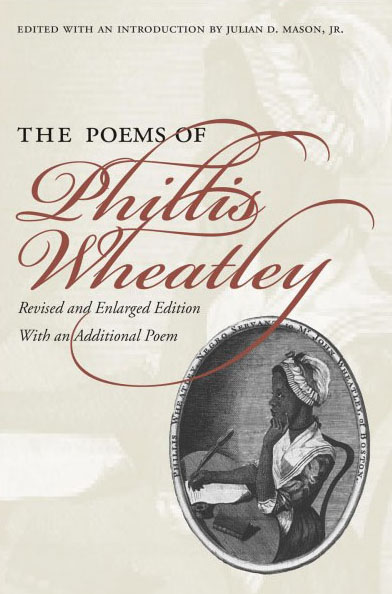
Massachusetts has an impressive literary history, and more than a few well-known poets hail from the Commonwealth. This post highlights Phillis Wheatley, Ralph Waldo Emerson, Elizabeth Bishop and more!


This post highlights three collections of poetry found within the library's collection whose common denominator is that they all feature Boston as their subject. Dating from the late 1800s to 2013, the collections present a varied view of the same city.

Here in the Commonwealth, Patriots’ Day is celebrated on the third Monday of April and commemorates the Revolutionary War battles of Lexington, Concord, and Menotomy. Patriots' Day was first proclaimed as a holiday in 1894 by Governor Frederick Thomas Greenhalge. 

To celebrate both Patriots’ Day and Poetry Month, check out a small album available on our Flickr page with selections from Poems of American Patriotism, 1776-1898, compiled by Frederick Lawrence Knowles and published in 1898. Highlighted poems honor Lexington and Concord, the Boston Tea Party, and Paul Revere.

Elizabeth Roscio
Preservation Librarian

Monday, April 17, 2023

Greenery and gardens throughout Boston’s history

The sun is shining longer, birds are chirping, and there is a hint of freshness in the air which can only mean one thing: spring is here! While spring officially started on March 20th, you never know what kind of weather we’ll get here in New England. April always has much more of a “spring feeling” and with it comes National Garden Month, as designated by the National Garden Bureau. To honor this month-long spring-focused celebration, we wanted to share a brief history of a few topics related to gardening that might pique your interest, especially this time of year.

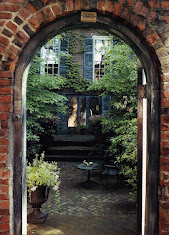
For those of you who have been to the State House before, you’ve likely been to Beacon Hill, exploring shops and restaurants while walking over the old cobblestone streets. Did you know there are hidden gardens throughout Beacon Hill? In the 1820s and 1830s, row houses were built in Beacon Hill and behind them were long, narrow yards. These yards, which were strictly functional in those days due to the lack of modern plumbing and other services, were used for the outhouse, trash pits, laundry, and summer cooking. 
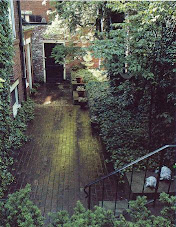
Image of garden on
Mt. Vernon St, Beacon Hill
Image of garden on
West Cedar St, Beacon Hill

By the 1920s, a few homeowners were able to transform these backyard functional spaces into areas of enjoyment and in 1929, the Beacon Hill Garden Club was established. Gone were the days of laundry lines, outhouses, and sheds and in their place, flowers started to bloom and greenery took over, as you can see from the following more-modern day images.
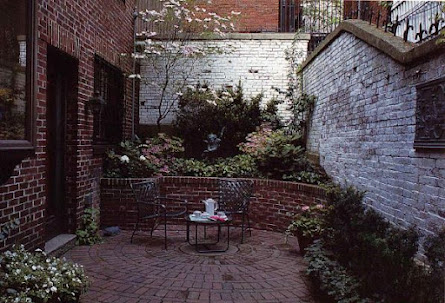
Image of garden on West Cedar St, Beacon Hill

The Beacon Hill Garden Club, an organization committed to urban landscaping and education, offers a tour of a handful of these gardens each year. This year’s tour is taking place on Thursday, May 18th with spaces open between the hours of 9am and 5pm.

Image courtesy of Beacon Hill Garden Club

Community gardens also have a long history here in Boston and elsewhere, though community gardening started in England during the 1700s. At the time, the countryside was transformed from open, common land to fenced off land owned by commercial farms. Cities were also being built up, with blocks upon blocks of streets containing narrow workers’ housing, and lacking open space or gardens. These rural and urban changes prevented thousands of people from accessing land that they previously depended on for food. As a result of these needs, wealthy landowners were prompted to lease small pieces of their land to farm workers as community gardens. Crafters in cities also banded together to rent land on the outskirts of town so they could plant flowers and vegetables. Around a century later, these two movements merged to create a national policy for the municipal provision of land for the purpose of community gardening.

A similar situation happened in the United States, which brought the community gardening movement overseas from England. The trigger in the US was the economic depression that took place between 1893-1897. At the start of that financial crisis, 491 banks failed. Railroad traffic was impacted over the course of the next year, which caused one-third of railroad companies to go bankrupt. At that point in history, railroads were the nation’s main industry and when they started experiencing bankruptcy, thousands of people lost their jobs. Over the course of the next few years, cities were full of workers without jobs. Cities were also becoming more built up, with skyscrapers and tall tenements replacing houses and smaller downtown buildings. It became more difficult for families to feed themselves due to all of these changes. As a result, owners rented their vacant land to workers so that they could plant potatoes, beans, and other vegetables. Changes like this were happening throughout the country, leading to the rise of community gardens.

Berkeley Community Garden
(Creative Commons)
Community gardening lives on throughout the country, including here in Boston. You can even become part of this long-standing movement! The Trustees is the largest nonprofit owner of community gardens in Boston, managing 56 gardens in the city for a total of 15 acres across eight neighborhoods. For a yearly dues, you can have a plot of land in one of the gardens in Dorchester, East Boston, the Fenway, Jamaica Plain, Roxbury, Mattapan, Mission Hill, or the South End. If you’re not ready to take the dive to tend to a garden plot or if you’re just visiting the Boston area, entrance to any of those community gardens is free of charge and is open to the public during events and programs.

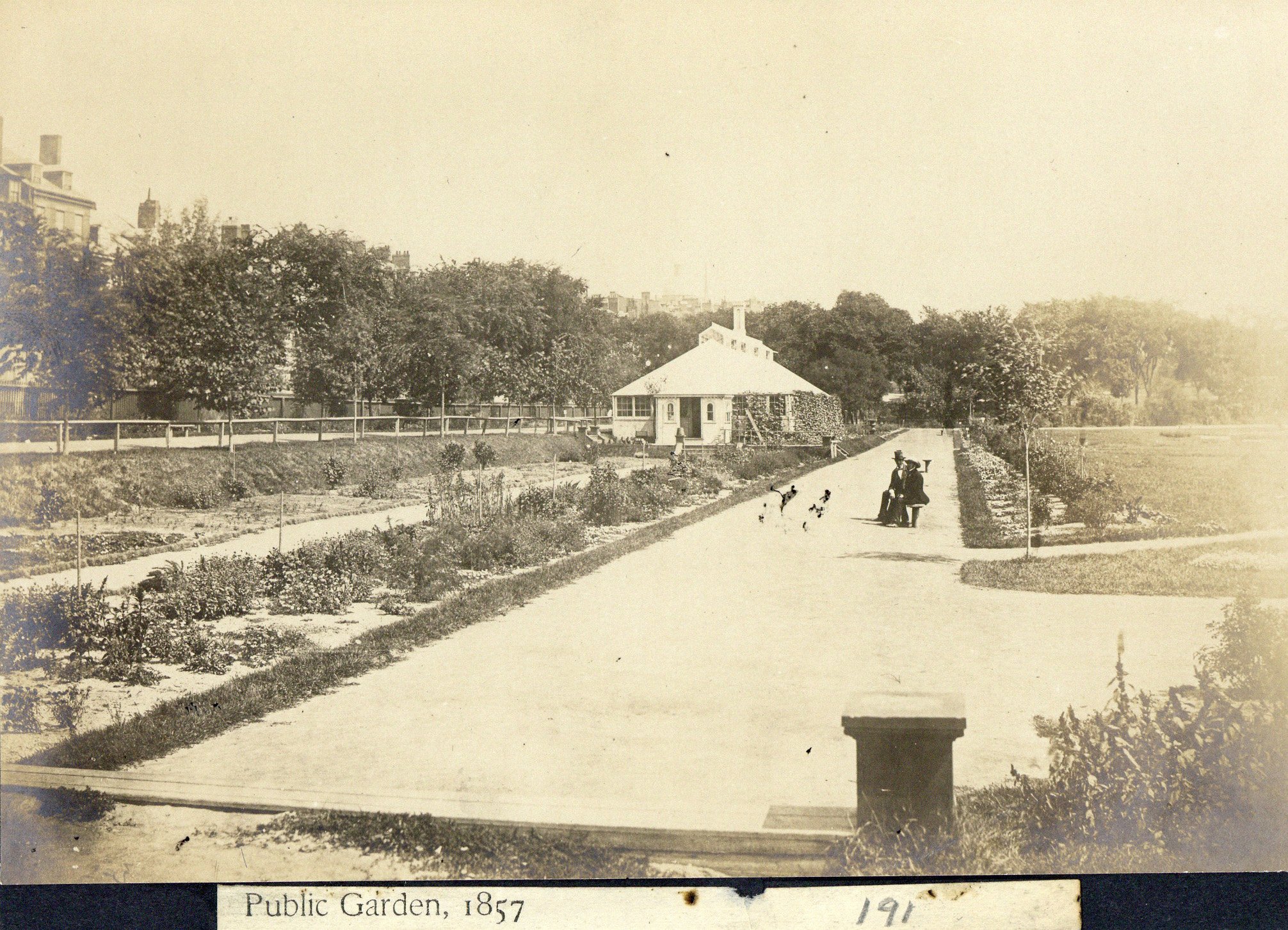
Image from State Library 
Digital Repository
Of course, we can’t talk about gardens in the Boston area without talking about the Boston Public Garden. Established in 1837, the Boston Public Garden was America’s first public botanical garden.Did you know it was established two-hundred years after Boston Common? The Common was America’s first public park. It served as a practical space with walkways made so that people could cross town. The Public Garden, however, was decorative. It was (and still is) filled with flowers, greenery, and paths made for wandering and enjoying the outdoors. You’ll also find fountains, monuments, and of course the swan boats! This year the swan boats take to the water on April 15th! Click here for more information.

Image circa 1935-1955, courtesy
of Digital Commonwealth
Boston Public Garden, May 2005

Boston Public Garden, May 2018

With spring in the air and National Garden Month upon us, we hope you can get out and enjoy all that New England, and especially Boston, has to offer this time of year!

Works consulted:


Jessica Shrey
Reference Librarian

Thursday, April 13, 2023

Happy Spring - Meadowlarks Have Landed in the Library!

Spring is in the air in the northeast, and one of the markers of the change of seasons are the bird songs that you might hear outside your window! One of those could be that of the meadowlark (plate 136). Four are shown here in their nest, among the yellow-flowered gerardia. From the Audubon field-guide, we learned that males defend their nest by singing.

Click here to hear the meadowlark's call, provided by the American Bird Conservancy, and visit us through May 9 to see the print on display!