Monday, September 26, 2022

Now Online: Group Photos of WWI “Yankee Division” Soldiers

On October 31, 1938, the Boston Globe donated a collection of forty-four original photographs of World War I soldiers to the State Library of Massachusetts. Consisting primarily of members of the 101st, 104th, 301st, and 302nd Infantries of the 26th (“Yankee”) Division, this collection depicts groups of soldiers at military training camps, most often Camp Devens in Ayer, Massachusetts, and Camp Darling in Framingham, Massachusetts.

Co. D, 6th Regt., Mass. Infantry, Camp Devens, 1917

As part of our ongoing efforts to make our collections freely available online, we have digitized and uploaded this historical collection to our online repository, and it is now available for viewing at
this link

Although most of the photographs lack annotation, some do include a list of the soldiers’ names and addresses on the back, which might be of particular interest to genealogists. For example, several photos of soldiers from the 104th Regiment include handwritten names and addresses from Massachusetts cities such as Salem, Peabody, Beverly, and Quincy, as shown below.


This recently digitized collection is complemented by another large photograph collection: individual portraits of WWI “Yankee Division” soldiers, which were also donated to the State Library by the Boston Globe. You may view that collection in our online repository and read all about it in a previous blog post from the State Library.

If you have any questions about either of these WWI photograph collections, please don’t hesitate to reach out to our Special Collections Department, either by phone at 617-727-2595 or by emailing us at Special.Collections@mass.gov. And keep an eye on our online repository, as we are adding new publications and collections each weekday.


Laura Schaub
Cataloging Librarian

Monday, September 19, 2022

Roll Call Votes

A common inquiry we receive at the State Library is researchers wanting to see roll call votes. Or more specifically, wanting to see how an individual legislator voted on a certain bill. While roll call votes are accessible through the House and Senate Journals, and online through the Massachusetts Legislature site, roll call votes are not required for every piece of legislation to pass. 

In general, roll call votes, or voting by “yeas” and “nays,” is a method in which the clerk or presiding officer calls each member’s name and their answer of yea or nay is recorded. In Massachusetts, legislators have the option of voting Yea (Y), Nay (N), Present (P), or Not Voting (X). An asterisk (*) next to a member’s name denotes that the vote was made after the roll call was taken. 

Example of House Roll Call from
Yea/Nay Supplement; Note Roll
Call No. 184.

Some bills and specific legislation in Massachusetts require roll call votes as determined by the state’s Constitution. For example, bills authorizing the Commonwealth to borrow or lend money or for land taking require roll call votes. For more information, see the Massachusetts Legislative Research and Drafting Manual

If you are researching a bill, and want to know whether a roll call vote occurred, you can check the bill’s history either in the journals or online. For the House, roll call votes are organized into the Yea/Nay Supplement of the journals. Each roll call vote is assigned an identifying number. In the print House journals, the supplement can be found at the end of the last volume. Researchers can also download roll call votes as PDFs using the specific roll call number or can download all roll call votes for a given year from the Massachusetts Legislature Site. For the Senate, roll call votes are included in the journals on the day in which the vote was taken; Senate roll calls are also numbered separately.

Another helpful resource to consult is the Massachusetts Political Almanac. The almanac compiles key Senate and House Roll Call votes from the yearly legislative session. It provides a summary of the bill as well as the outcome of the vote. The library holds print issues of the Massachusetts Almanac back to 1974. 

As the almanac notes, while it is beneficial to know how your legislator voted on a certain cause or bill, a simple “yea” or “nay” cannot encompass all motivations or reasoning behind a vote. That’s why it is encouraged to contact your legislator’s office to learn more about each issue.

For assistance on any of the resources mentioned, please contact the Reference Department at reference.department@mass.gov 


April Pascucci
Reference Librarian

Thursday, September 8, 2022

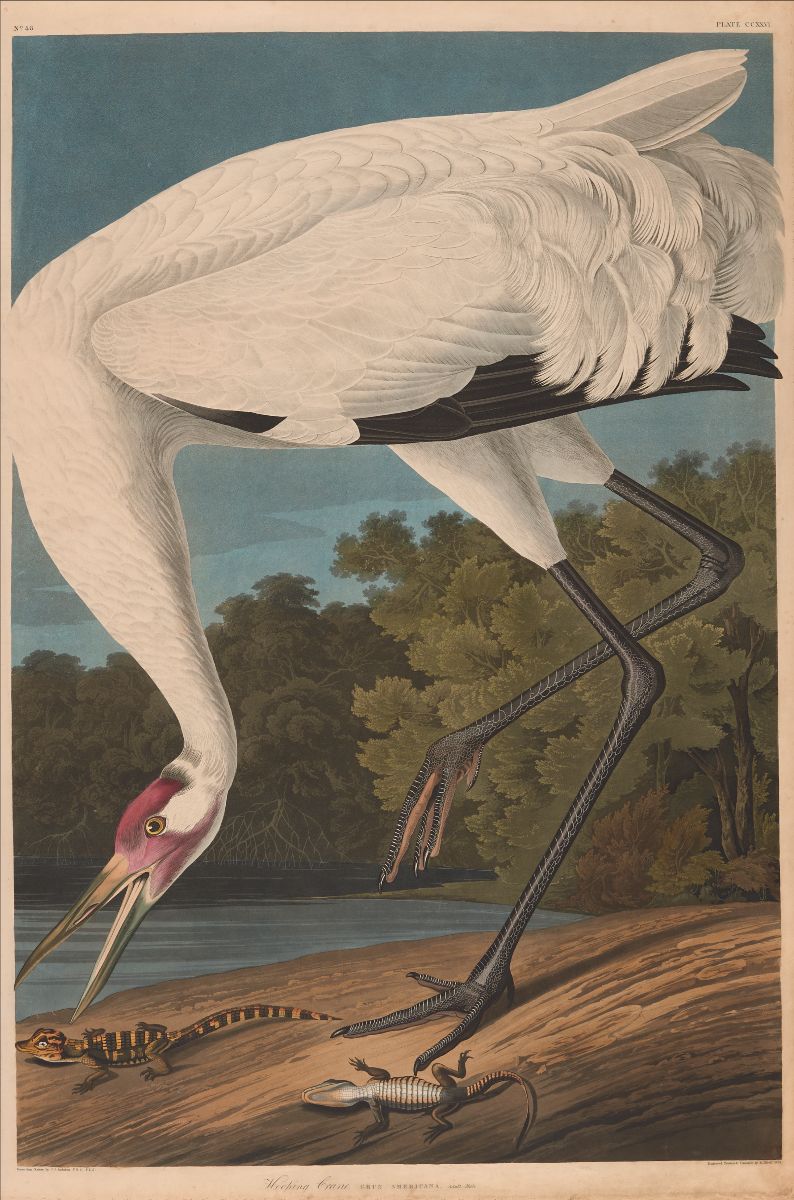
Audubon’s Hooping Crane lands in the Library!

Visit us now through October 12 to see the Hooping Crane (plate 226) on display in the Audubon case in our Main Library reading room. This crane is the tallest bird in North America - which is illustrated in this print! The birds portrayed in the double-elephant folio are drawn to life-size, so the crane is illustrated as bent over in order to fit on the page. And if you look closely, you can see that its tail feathers extend beyond the margins.

Audubon described the crane as, "Proud of its beautiful form, and prouder still of its power of flight, it stalks over the withering grasses with all the majesty of a gallant chief. With long and measured steps he moves along, his head erect, his eye glistening with delight." You can read his full account here.

Monday, September 5, 2022

Back to School in the Commonwealth

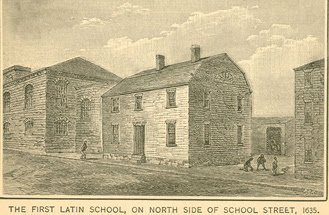
Image courtesy of Boston Latin School
It’s the beginning of September and we all know what that means: it’s back-to-school season! It’s the time of the year when caregivers are hunting down school supplies for children, teachers are readying their classrooms, and college students are reading over class syllabi. Education has always been an important part of Massachusetts’ history, starting with the development of the Boston Latin School in 1635, which was the first school in the colonies. This week we’d like to feature some items in our collection that celebrate this exciting time of year and highlight the history of education in the Commonwealth. 

Image available
in Special Collections
The Board of Education for what is now named the Department of Elementary and Secondary Education, was established by 1837 Cha. 0241. This Act, titled An Act Relating to Common Schools, was pushed into motion by Horace Mann. Mann, who had been a Representative in the Massachusetts State Legislature and later became a State Senator, had a passion for education. In the 1800s he sought to improve Massachusetts' failing educational system. While serving as the Board of Education's first secretary, he had yearly reports published on the state of education in the commonwealth. These annual reports were his way of working to reform the struggling system and these are the same types of annual reports that the State Library has in its collection today. Here you can see the 1827 annual report of the Board of Education that named Mann as Secretary.

Not only did Mann work to have annual reports published, but he also established the Common School, which is today’s version of a public school. He believed that every child in the commonwealth was entitled to have a quality education paid for by taxes and local funds. He also was at the helm of the concept of the Normal School, which provided teachers with proper training. 

The first state-sponsored Normal School, established
in 1839 on the Lexington Battle Green. It would later
become Framingham State University.
As I was researching the above act related to Common Schools, I came across an act that is very exciting for librarians such as myself. 1837 Chap. 0147 established libraries in Common Schools. It allowed for every legally recognized school district to raise money to establish and maintain a library. As you can see in this act, the budget for a Common School library at the time was just a little bit different than the budgets of today’s libraries!

In order to serve all students in the area, the New England Asylum for the Blind opened in 1832. Now known as the Perkins School for the Blind, the New England Asylum for the Blind made Massachusetts home to the first school of its kind. The educational methods used there were inspired by Dr. Samuel Gridley Howe’s visits to institutions for the blind in Europe. 

Before the invention of Braille, Howe developed a raised, embossed type called Boston Line Type, or Boston Line Letter. Examples of this are rare, so we were excited to find pages of line type at the back of our 1833 volume titled Address of the trustees of the New-England Institution for the Education of the Blind to the public

If you’d like to learn more about the Perkins School for the Blind, you can view their annual reports here

Education in Massachusetts has come a long way since the start of the Boston Latin School and the work of Horrace Mann. If you’re curious about what is going on with education in Massachusetts these days, check DSpace, our digital repository. Here you’ll find some of the latest documents that the Executive Office of Education has produced, broken down by department or school system. A few collections to note include:

It’s thanks to an exhibit done by State Library staff in 2016 that brought the inspiration for this blog post. Please be sure to take a look at that now-virtual exhibit. It outlines a detailed history of education in Massachusetts and provides some great visuals as well. Happy start of the school year!


Jessica Shrey
Reference Librarian

Thursday, September 1, 2022

State Library Newsletter – September Issue

The September issue of our newsletter is out today!  Pictured here is a preview but the full September issue can be accessed by clicking here. And you can also sign up for our mailing list to receive the newsletter straight to your inbox.


Monday, August 29, 2022

On Display in the State Library

It’s time to head back to school! For our display this month, we’re featuring a circular distributed by the Quincy School Committee in 1835 with advice for both teachers and parents. And referenced at the bottom of the circular are a few of the textbooks that the students will be using during the school year – some of which we have in our Special Collections holdings!

The Quincy School Committee issued this circular on September 1, 1835 with the full title of “Rules and regulations for the public schools in Quincy: also, some remarks on the due observance of the rules, addressed to parents.” On the webpage for the current Quincy School Committee, their mission reads as “the purpose of the School Committee is to establish policies and make decisions on the basis of educational philosophy and goals, the most crucial of these being facilitating the optimal learning experience of the children enrolled in the Quincy Public Schools.” Comparing that with the text of this circular shows that the purpose remains relatively unchanged 187 years later.

The section for teachers covers five points, some of which fall into generalities like start and end times to the day, absences, and tardiness. The fourth point is the most lengthy, and addresses student conduct. In this section, teachers are tasked with trying to keep their students in line, with instructions as follows, “You are also requested to prevent their throwing stones or any other hard substances at each other, or into any of the enclosures about the premises you occupy . . . Allow no quarreling among the scholars at any time - nor any vulgar or profane language . . . Impress upon their minds the importance of correct manners and habits; inspire in them a strict regard for truth, honesty and amiable deportment . . .”

The list goes on! But regulations and suggestions were extended to parents and guardians, too. That section begins by informing them that success in school is dependent on the guardian's cooperation with the teacher. It also includes the following, with printed emphasis, to stress the role that teachers play “You, undoubtedly, have your patience tried with your own children, though you may have but a half dozen under your care, while the teacher has from fifty to a hundred or more perhaps: – You have only to govern them – the teacher has to govern the multitude, and advance them in their studies at the same time – You are accountable to no human power for your management – he is responsible to numberless parents and the public generally.” The circular really lays down the law for guardians, and stresses the importance of education by including that “to get an education is a great object of childhood.” Click on the above image to read the circular in full.

According to the circular, at meetings on May 7th and August 31st, the committee voted on the textbooks that would be used for the school year. We were lucky to find that some of those  are part of our collection. Accompanying the circular on display are The National Spelling-Book and Pronouncing Tutor, published in 1828, and First-Class Reader: a Selection for Exercises in Reading, published in 1834. Both books are by Benjamin Dudley Emerson, who was the principal of the Adams Grammar School in Boston, and published textbooks on spelling, reading, and arithmetic, which were widely used in schools in the 1800s.

The committee voted that a copy of the circular should be printed and a copy sent to every family in the town. On the back of our copy is a handwritten notation dated September 1835 that reads “to the School Committee, Dorchester” so it’s possible that the circular was sent to other local school committees to serve as a reference. A stamp on the back indicates that the State Library received it as a gift on August 25, 1936, though a search of the 1936 annual report did not provide any additional information about the gift.

If you’d like to mark the beginning of the 2022-2023 school year by checking out some school resources and textbooks from the 1830s, then be sure to visit us from September 1 through October 3 to see these items in person!


Elizabeth Roscio
Preservation Librarian

Monday, August 22, 2022

Using the State Library’s Conference Room

The State Library of Massachusetts offers a wide array of free services to Massachusetts state employees, including the use of our conference room, located on the library’s mezzanine level in Room 442 of the Massachusetts State House, overlooking the library’s historic reading room. The conference room, which is also available to non-profit organizations, is furnished with a table and ten permanent chairs and is equipped with a large screen television/monitor. A projector and screen are also available for use within the conference room when requested in advance of a scheduled meeting. 

The library’s policies regarding conference room usage may be viewed in their entirety on our website. Please be advised that due to the library’s architectural design, sounds from the conference room may carry to other parts of the library.

The conference room may be reserved for use during the library’s regular hours of 9am to 5pm, Monday through Friday. To make a reservation, you may fill out our online reservation form, email us at library.reservations@mass.gov, or give us a call at 617-727-2590. We look forward to accommodating your next meeting at the State Library!

Laura Schaub
Cataloging Librarian