Monday, January 11, 2016
New exhibition on the history of the Massachusetts State House
Opening this week at the State Library of Massachusetts is a new exhibition entitled A Historical View of the Massachusetts State House. Using materials from the State Library’s holdings, this exhibition describes the history of the Commonwealth’s legislative buildings, the current State House’s original design and construction, and several significant renovations and additions.
The exhibition runs from January 14 through May 30, 2016. It can be viewed outside of the Library, Room 341 of the State House, Monday-Friday, 9am-5pm. Parts of the exhibit are also available online through our Flickr page.
Thursday, January 7, 2016
January Author Talk: Michael Blanding

The Map Thief by Michael Blanding
Thursday, January 21, 2016—Noon to 1:00 pm
State Library of Massachusetts—Room 341, Massachusetts State House
Please join us at the State Library at noon on Thursday, January 21, for an Author Talk with award-winning investigative journalist and best-selling author Michael Blanding, who will be speaking about his recent book The Map Thief.
In this engrossing book, Blanding delves into the world of the antique map trade and tells the story of E. Forbes Smiley III, a map dealer who stole countless rare maps from libraries and universities around the world. In addition to detailing the downfall of this once esteemed map dealer, The Map Thief also reveals the history of the explorers and mapmakers who created the priceless maps that Smiley stole, giving the reader an even better understanding of the great loss to society when such cultural heritage items go missing.Mr. Blanding’s talk is free and open to the public, and copies of the book The Map Thief will be available for purchase and signing at the event. Please register online and join us on January 21st at the State Library.
Laura Schaub
Cataloging Librarian
Tuesday, January 5, 2016
The Short-Lived Biennial Legislative Session System in Massachusetts
If you’re familiar with Massachusetts legislative research materials such as the Acts and Resolves, the Legislative Documents series, and the House and Senate Journals, you will notice one strange similarity among them: volumes are missing for the years 1940 and 1942. Here’s why: During the 1918 session of the 1917 Constitutional Convention there was discussion among members of the MA General Court to change the election system from annual to biennial. Some of the main supporting arguments were that biennial elections would save money all around and allow elected officials more time to fulfill the duties of their offices. Others considered annual elections as “safeguards of the Republic.” The legislature voted in favor of this amendment, and it was subsequently ratified by the people of the Commonwealth. Holding biennial legislative sessions was considered a “logical corollary” to biennial elections, and many felt that a shift would filter out unnecessary legislation in an “over-legislated” state. In 1938 an initiative petition for such sessions was approved by the legislature and ratified by the people as Amendment LXXII in the MA Constitution.
1939 was the first year the General Court began meeting every other year instead of annually (they met in 1939, 1941, and 1943). In 1942 (for six days) and 1944 (for 15 days) they held two special sessions that resulted in a handful of acts and resolves on particular subjects that required urgent attention. However, no session was held in 1940 and no legislation or other materials relating thereof was published during that year. The biennial session system was short-lived and in 1945, after a referendum vote, the General Court abandoned biennial sessions and once again began convening annually.
Much of this information, as well an overall history of the Massachusetts General Court, can be found in the title Leading the Way: a History of the Massachusetts General Court, 1629-1980 by Cornelius Dalton, et al., which is available in the State Library.
Kaitlin Connolly
Reference Department
1939 was the first year the General Court began meeting every other year instead of annually (they met in 1939, 1941, and 1943). In 1942 (for six days) and 1944 (for 15 days) they held two special sessions that resulted in a handful of acts and resolves on particular subjects that required urgent attention. However, no session was held in 1940 and no legislation or other materials relating thereof was published during that year. The biennial session system was short-lived and in 1945, after a referendum vote, the General Court abandoned biennial sessions and once again began convening annually.
Much of this information, as well an overall history of the Massachusetts General Court, can be found in the title Leading the Way: a History of the Massachusetts General Court, 1629-1980 by Cornelius Dalton, et al., which is available in the State Library.
Kaitlin Connolly
Reference Department
Monday, December 21, 2015
Holiday Traditions and Interesting State Library Collection Finds
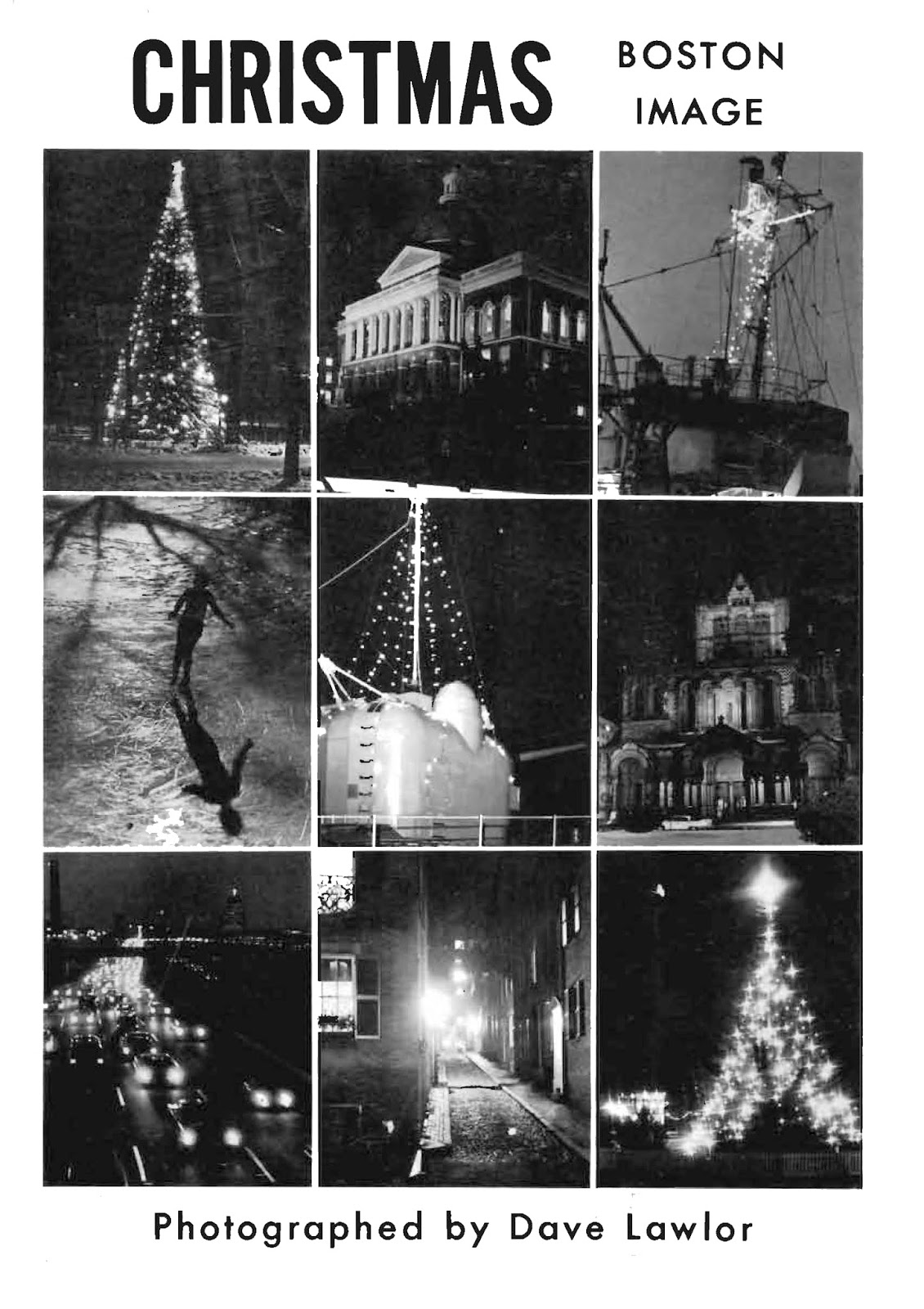
The holiday season is in full swing at the State House with holiday music filling the halls on a daily basis. Boston itself is full of holiday traditions—from the lighting of the menorah and Christmas tree on the Boston Common to ice skating on the Frog Pond to the year-long awaited holiday performances of the Nutcracker ballet and the Boston Pops concert at Symphony Hall.
Judy Carlstrom
Technical Services
Technical Services
Monday, December 14, 2015
A “Wartime Story” From The Stacks
While researching Massachusetts governors recently, I came across an interesting item in our collection having to do with Governor Endicott Peabody. Governor Peabody was the State’s 62nd Governor and served a single term from January 3, 1963 to January 7 of 1965. While it is not odd that we have a number of resources related to Massachusetts legislators, governors and historical figures, I was surprised to find an item called The Wartime Story of Governor Peabody. This booklet is a compilation of articles written in March of 1963 by Edward G. McGrath for the Boston Globe. The ten part series tells the story of the U.S submarine Tirante in World War II and Lt. Endicott Peabody’s role as an officer on board. The articles include a number of black and white photographs of the crew members on board, ships sinking through the lens of a periscope and officers receiving Medals of Honor.
The details of the Tirante’s exploits were classified for about twenty years before the Boston Globe requested that The Navy Department release some of its information. Governor Peabody was newly elected at the time, upsetting Republican incumbent John Volpe by a slim margin, and reporters were probably hoping to get as much information about their new governor as possible. But what is amazing is that these articles were clearly cut out of the newspaper, glued to a piece of paper, laminated, stamped with a three-hole punch and bound together by red string. There is a strong resemblance to an old scrapbook put together by a proud parent many decades ago.
The Wartime Story of Governor Peabody was probably saved by a State Librarian. Before scanning or digital publications became common place, librarians had to find other ways to hold onto articles, brochures and pamphlets with information regarding Massachusetts. Newspaper does not hold up over time, (and from a preservation stand point the obvious smudges of glue are an example of what not to do,) but many steps were taken to make sure this article would be available for patrons and researchers in the future.
Today, librarians spend less time cutting and pasting clippings or creating books for patrons to read, but time is spent collecting information. While we do have microfilm and print copies of many historical newspapers, we also subscribe to databases so that our patrons can search for articles. We pull reports off the internet and catalog them into our digital repository, creating booklets as PDFs instead of with glue and ribbon. While the steps we go through may be quite different, our goal to make information available is still the same.
Stephanie Turnbull
Reference Librarian
Tuesday, December 8, 2015
December Author Talk: Joseph McMaster

Charles Street Jail by Joseph McMaster
Thursday, December 17, 2015—Noon to 1:30 pm
State Library of Massachusetts—Room 341, Massachusetts State House
Please join us at the State Library at noon on Thursday, December 17, for an Author Talk with award-winning journalist and documentary filmmaker Joseph McMaster, who will be speaking about his newly released book Charles Street Jail. Opened in 1851 near Boston’s Massachusetts General Hospital, this elegant granite building was hailed as one of the finest jails in the country and was lauded for the humanitarian treatment of its prisoners. Also known as the Suffolk County Jail, this building housed some of Boston’s most notorious criminals, including future Boston Mayor and Massachusetts Governor James Michael Curley and Boston organized crime boss James “Whitey” Bulger.
Conditions in the Charles Street Jail deteriorated over time, however, leading to the jail’s closure in 1990. After sitting vacant for over a decade, this stunning building was eventually transformed into the completely renovated Liberty Hotel. This luxury hotel retains many of the architectural elements original to the building, including the jail’s expansive central atrium and catwalks. Mr. McMaster’s new book includes over 200 historic images, including photographs of the jail from the time of its original construction to its recent renovation, as well as photographs of the infamous prisoners who were housed within its walls.
Mr. McMaster’s talk on the history of the Charles Street Jail is free and open to the public, and copies of the book Charles Street Jail will be available for purchase and signing at the event. Please register online and join us on December 17th at the State Library.
Laura Schaub
Cataloging Librarian
Subscribe to:
Posts (Atom)